


Fragrance Oil vs Essential Oil: What's the Difference and Which Should You Buy?
Daniel BrooksLast updated: March 2026
Walk into any home fragrance aisle and you'll see two types of bottles side by side: fragrance oils and essential oils. They look similar. They both smell great. But they're fundamentally different products made through completely different processes, and choosing the wrong one for your project can mean wasted money or disappointing results.
This guide breaks down every meaningful difference between the two so you can buy with confidence, whether you're making candles, filling a diffuser, mixing soap, or just scenting your home.

Essential oils are extracted directly from plants, while fragrance oils are carefully blended in a lab for consistent, long-lasting scent.
What Is a Fragrance Oil?
A fragrance oil is a scent compound created in a laboratory by blending aromatic chemicals, both synthetic and naturally derived. Trained perfumers (called "noses" in the industry) combine dozens of individual aroma molecules to replicate natural scents or create entirely new ones that don't exist in nature.
The result is a concentrated oil that delivers consistent scent every single batch. A strawberry fragrance oil smells like strawberry whether you buy it in January or July, because the formula is precisely controlled. That consistency is why fragrance oils dominate the candle, soap, and home scent industries.
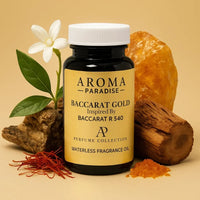
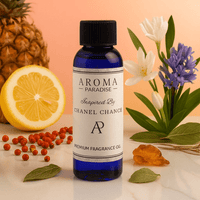
Aroma Paradise carries 129 fragrance oils starting at $6.99, spanning everything from classic florals to designer-inspired perfume dupes to hotel lobby recreations.
What Is an Essential Oil?
An essential oil is a concentrated liquid extracted directly from plant material through steam distillation, cold pressing, or solvent extraction. Lavender essential oil comes from lavender flowers. Peppermint essential oil comes from peppermint leaves. Lemon essential oil comes from lemon rinds.
Because they're plant-derived, essential oils contain the actual chemical compounds found in that plant, which is why they're used in aromatherapy. Lavender contains linalool and linalyl acetate, compounds studied for their calming properties. Peppermint contains menthol, which has documented effects on alertness and nasal congestion.
Aroma Paradise's collection of 17 essential oils includes popular options like lavender, peppermint, eucalyptus, tea tree, and lemongrass.
The Complete Comparison Table
| Factor | Fragrance Oil | Essential Oil |
|---|---|---|
| Source | Lab-created blend of aroma chemicals | Extracted directly from plants |
| Scent Variety | Virtually unlimited (129+ at AP alone) | Limited to what plants produce (~100 common) |
| Consistency | Identical batch to batch | Varies by harvest, region, season |
| Price Point | $6.99-$19.99 per bottle (AP pricing) | $8-$50+ depending on plant rarity |
| Candle Performance | Excellent scent throw, designed for wax | Weaker throw, some flash point issues |
| Diffuser Use | Works in all diffuser types | Works in all diffuser types |
| Soap Making | Stable in cold/hot process | Some discolor or accelerate trace |
| Skin Safety | Body-safe grades available (roll-ons, perfume) | Must be diluted; some cause photosensitivity |
| Therapeutic Benefits | Scent-based mood effects only | Documented aromatherapy compounds |
| Shelf Life | 2-3 years (stable formulation) | 1-3 years (citrus oils degrade faster) |
| Allergen Risk | Phthalate-free options available | Natural allergens present (limonene, linalool) |

Aroma Paradise sells both fragrance oils and essential oils, so you can pick the right product for each use case.
When to Use Fragrance Oils
Candle Making
Fragrance oils outperform essential oils in candles, period. They're formulated to bind with wax (soy, paraffin, coconut, beeswax) and release scent evenly as the candle burns. A well-made fragrance oil candle at 6-10% fragrance load will fill a room. An essential oil candle at the same load often produces a faint, inconsistent scent because the volatile compounds evaporate differently in wax.
Soap Making
Fragrance oils are tested for cold process and melt-and-pour soap stability. They hold their scent through saponification (the chemical reaction that turns oils into soap). Many essential oils partially or fully lose their scent during this process, and some (like vanilla and certain florals) cause cosmetic issues like discoloration or acceleration.
Home Scenting
If your goal is "I want my living room to smell like a five-star hotel lobby," fragrance oils are the clear choice. Scents like the Aroma Paradise Hotel Collection ($14.99) recreate specific luxury hotel scents that no single essential oil can replicate. Try getting "Ritz-Carlton lobby" from a plant. It doesn't exist as a single botanical.
Variety
Essential oils give you roughly 100 common scents (and some of those, like rose otto or neroli, cost $50-$200 per ounce). Fragrance oils give you thousands. Perfume-inspired oils ($19.99) can replicate designer fragrances. Nature-inspired blends (from $6.99) capture complex outdoor scenes like "rain forest" or "ocean breeze" that no single plant extract can achieve.
When to Use Essential Oils
Aromatherapy
If you want documented therapeutic effects (stress reduction from lavender, mental clarity from rosemary, congestion relief from eucalyptus), essential oils are the right tool. These effects come from specific chemical compounds in the plant extract, not from the scent alone.
Natural Skincare
Tea tree oil has documented antimicrobial properties. Frankincense has anti-inflammatory compounds. If you're formulating a skincare product with functional ingredients, essential oils serve a purpose that fragrance oils don't.
Minimal-Ingredient Products
If you sell or use products marketed as "all natural" or "pure botanical," essential oils are the correct choice for labeling compliance.
Can You Use Both Together?
Absolutely. Many experienced candle makers and soap crafters blend fragrance oils with essential oils to get the best of both worlds: the scent throw and stability of a fragrance oil with a touch of essential oil for its therapeutic properties or marketing appeal. A common approach is 80% fragrance oil + 20% essential oil by weight.
The Price Breakdown
Here's where fragrance oils really shine for everyday home use:
- Aroma Paradise fragrance oil: From $6.99 per bottle. A single bottle gives you weeks to months of diffuser use at 3-5 drops per session.
- Lavender essential oil (quality grade): $12-$25 per 10ml bottle. You'll go through it faster because the scent throw is lighter.
- Rose essential oil (true Rosa damascena): $50-$200 per 5ml. One of the most expensive commercially available essential oils.
- Aroma Paradise rose fragrance oil: $6.99. Same beautiful rose scent for daily home use at a fraction of the cost.
For diffusing, candle making, soap crafting, and general home scenting, fragrance oils give you better value per use. For targeted aromatherapy, essential oils are worth the investment.
Frequently Asked Questions
Are fragrance oils "fake" compared to essential oils?
No. Fragrance oils are professionally formulated scent compounds. Calling them fake is like calling a synthesized vitamin fake. The molecules are real, the scent is real, and the performance is often superior for home fragrance applications.
Can I use fragrance oils in an essential oil diffuser?
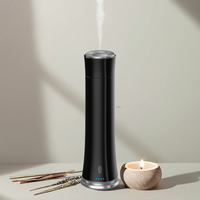
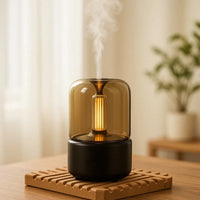
Yes, fragrance oils work in ultrasonic (water-based) diffusers. Aroma Paradise's ultrasonic diffusers ($29.99-$59.99) work with both oil types. For waterless diffusers, use waterless-specific fragrance oils.
Which lasts longer in a diffuser?
Fragrance oils generally produce longer-lasting scent throw because they're engineered for sustained release. Essential oils, being volatile plant compounds, tend to dissipate more quickly.
Are essential oils safer than fragrance oils?
"Natural" doesn't automatically mean safer. Undiluted essential oils can cause skin burns, allergic reactions, and toxicity in pets. Phthalate-free fragrance oils like Aroma Paradise's line are formulated with safety testing. Both are safe when used correctly.
Which is better for making room sprays?
Fragrance oils produce stronger, longer-lasting room sprays. Essential oils work too but fade faster. For the easiest option, grab one of Aroma Paradise's 21 ready-made room mists.
Aroma Paradise sells both. Pick what works for your project.
Shop Fragrance Oils