


A bathroom that stays fresh
How to make a bathroom smell good
Dry the room, clean odor sources and keep drains and textiles in order. Then use a controllable fragrance level that makes a clean bathroom feel finished.
The short answer
To make a bathroom smell good, remove the odor source, keep wet surfaces and textiles dry, clean the toilet and drains, and ventilate after showers. Once the room is clean and dry, a low-output plug-in or small-room waterless diffuser can add consistent fragrance without an open flame.
The source-first plan
A fresh bathroom is a moisture routine, not a masking routine.
Work in this order so fragrance is never asked to hide a maintenance problem.
Move humid air out
Run the exhaust fan during and after showers, spread towels to dry and wipe standing water. Persistent dampness needs source investigation.
Remove what holds odor
Wash bath mats and towels, empty the bin, clean the toilet and address soap residue. Clean the exact source instead of spraying over it.
Add controlled scent
Place a small-room diffuser in open air, away from splash zones. Start on the lowest useful setting and reassess from the doorway.
Diagnose before scenting
What the odor tells you to check.
If an odor returns quickly after cleaning, the source has not been resolved.
| Odor pattern | Check first | Fragrance role |
|---|---|---|
| Musty after showers | Ventilation, damp textiles, caulk and hidden moisture | None until moisture is addressed |
| Sour towel smell | Wash cycle, full drying and towel rotation | Optional finishing layer |
| Drain or sewage odor | Drain, trap or plumbing issue | Do not mask; investigate |
| Stale but otherwise clean | Air exchange and closed-door routine | Low, scheduled output can help |
Current bathroom-ready options
Choose compact control, not maximum output.
Compare placement, power, controls and the intended room tier on each product page. Keep every electric device outside splash zones and follow its exact instructions.

Waterless cold-air diffuser
Arc Touch Plug-In
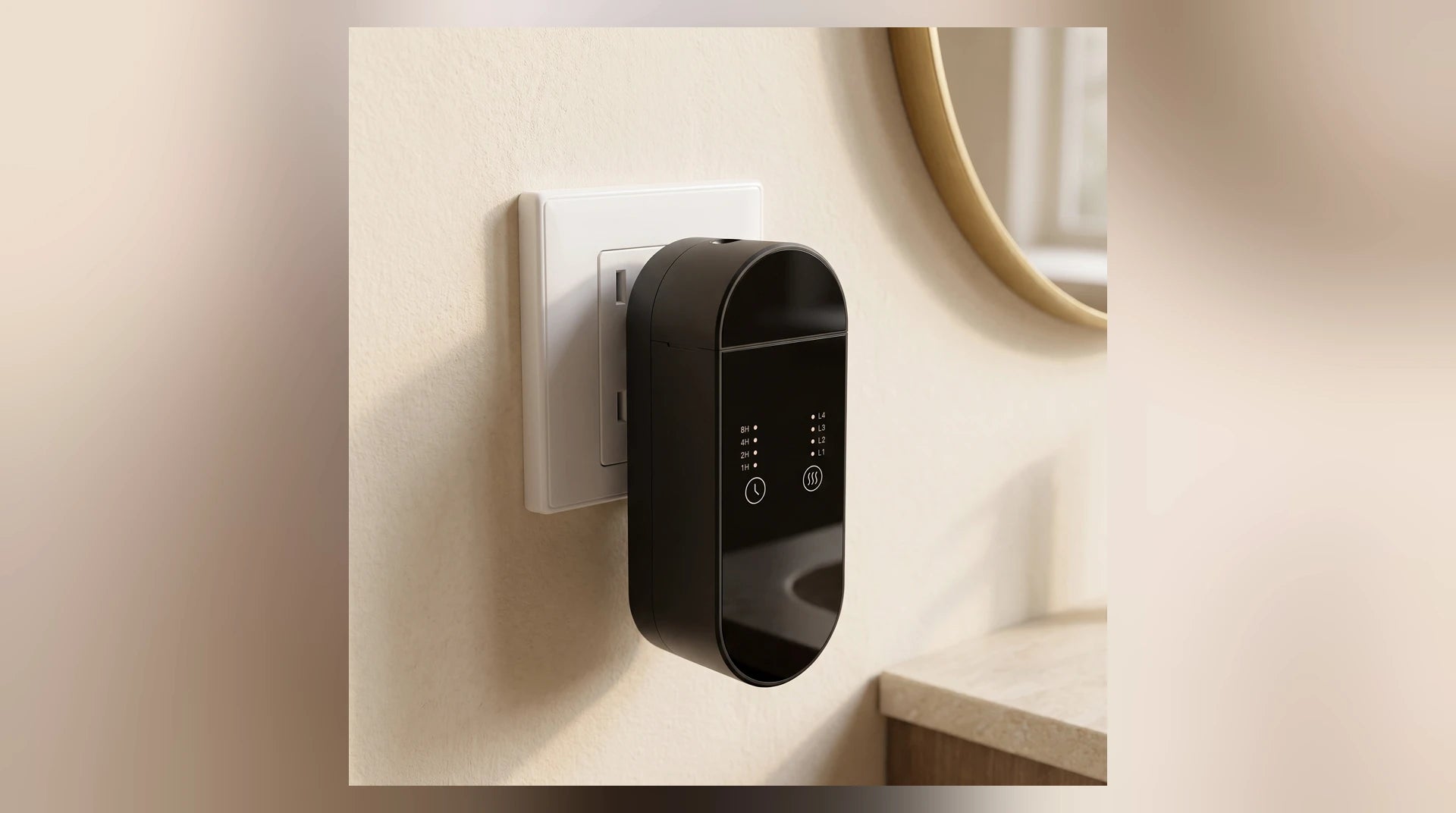
A compact no-app diffuser with four output levels, four timer presets and a rotating plug for upright wall-outlet placement.
- Four output levels
- No app required
- 30 ml internal bottle

Waterless cold-air diffuser
Contour Smart Plug-In
A compact direct-to-wall diffuser with a 60 ml oil reservoir, three intensity levels, repeating 3- or 6-hour routines and Bluetooth scheduling.
- App scheduling
- Three intensity levels
- 60 ml oil reservoir

Waterless cold-air diffuser
Night Light Plug-In
A direct-to-outlet waterless diffuser with on-device controls, four timer choices, and a night light.
- Cold-air atomization
- On-device buttons
- Corded setup
Swipe to explore 3 products
Make the routine hold
Build freshness into the week.
A repeatable schedule beats a strong emergency spray.
Dry and reset
Hang towels open, remove damp clothes, clear standing water and give the room time to exchange air. Empty small bins before odor develops.
Wash odor reservoirs
Launder mats and towels, clean the toilet and wipe the surfaces that collect residue. Check the drain rather than assuming every odor is atmospheric.
Inspect the room
Look at grout, caulk, fan intake and less-visible edges. A fragrance device should not distract from signs of persistent moisture or maintenance needs.
Placement ruleKeep a diffuser upright, ventilated and clear of water, towels, cabinets and direct fan pull. The exact device manual overrides general room advice.
Room-by-room decisions
The right routine changes with the bathroom.
Frequency, ventilation and shared use determine what needs attention—not the room label alone.
Give humidity an exit plan
Use the exhaust fan consistently, leave the door open after privacy is no longer needed and confirm the fan actually moves air. A scent device should wait until surfaces and towels are drying normally. If the room stays damp for hours, treat that as ventilation or maintenance work rather than a reason to increase fragrance.
Increase cleaning frequency, not output
More showers, towels and bin use create more odor reservoirs. Rotate towels before they sour, assign hooks with enough spacing to dry, wipe the toilet exterior and check the bath mat sooner. Keep the diffuser setting steady so a dirtier day does not turn into an escalating scent-strength cycle.
Use a light arrival baseline
A low setting before guests arrive can make a clean powder room feel prepared. Check soap, hand towels, the wastebasket and the toilet first. Because a powder room is usually compact, judge the scent from the hall with the door open; a setting that feels subtle in a larger room can become heavy here.
Frequently asked
Bathroom freshness questions.
How do I keep my bathroom smelling good all the time?
Keep it dry, ventilate after showers, rotate clean towels, empty the bin and clean the toilet and drains on a schedule. Add low, controllable fragrance only after those recurring sources are managed.
What is the best fragrance method for a small bathroom?
A compact plug-in or small-room waterless diffuser with adjustable output is useful when open flames are undesirable. Start low because bathrooms are usually small and enclosed.
Can fragrance cover a musty bathroom smell?
No. Mustiness points to damp materials, poor drying or another moisture source. Investigate and correct that condition before adding fragrance.
Where should I place a bathroom diffuser?
Place it upright in open air, outside splash zones and away from towels, curtains, shelving and direct exhaust pull. Follow the exact model instructions and electrical-clearance requirements.
Method and sources
Indoor-air guidance first; fragrance second.
This guide separates source control, moisture management and fragrance. Product recommendations use current Shopify product facts rather than generic coverage claims.
- U.S. EPA: Improving Indoor Air Quality — source control and ventilation principles.
- U.S. EPA: Moisture and mold — moisture control as the core prevention step.
- Aroma Paradise diffuser manuals — exact device placement and care instructions.
“Dry, clean, ventilate—then add scent.”
Source control is the durable answer. A controllable diffuser makes the finishing layer repeatable.