


Clear the kitchen air
How to get cooking smells out of the house
Capture odor while cooking, remove greasy residue and ventilate the connected rooms. Use fragrance only after smoke, food waste and surface buildup are under control.
The short answer
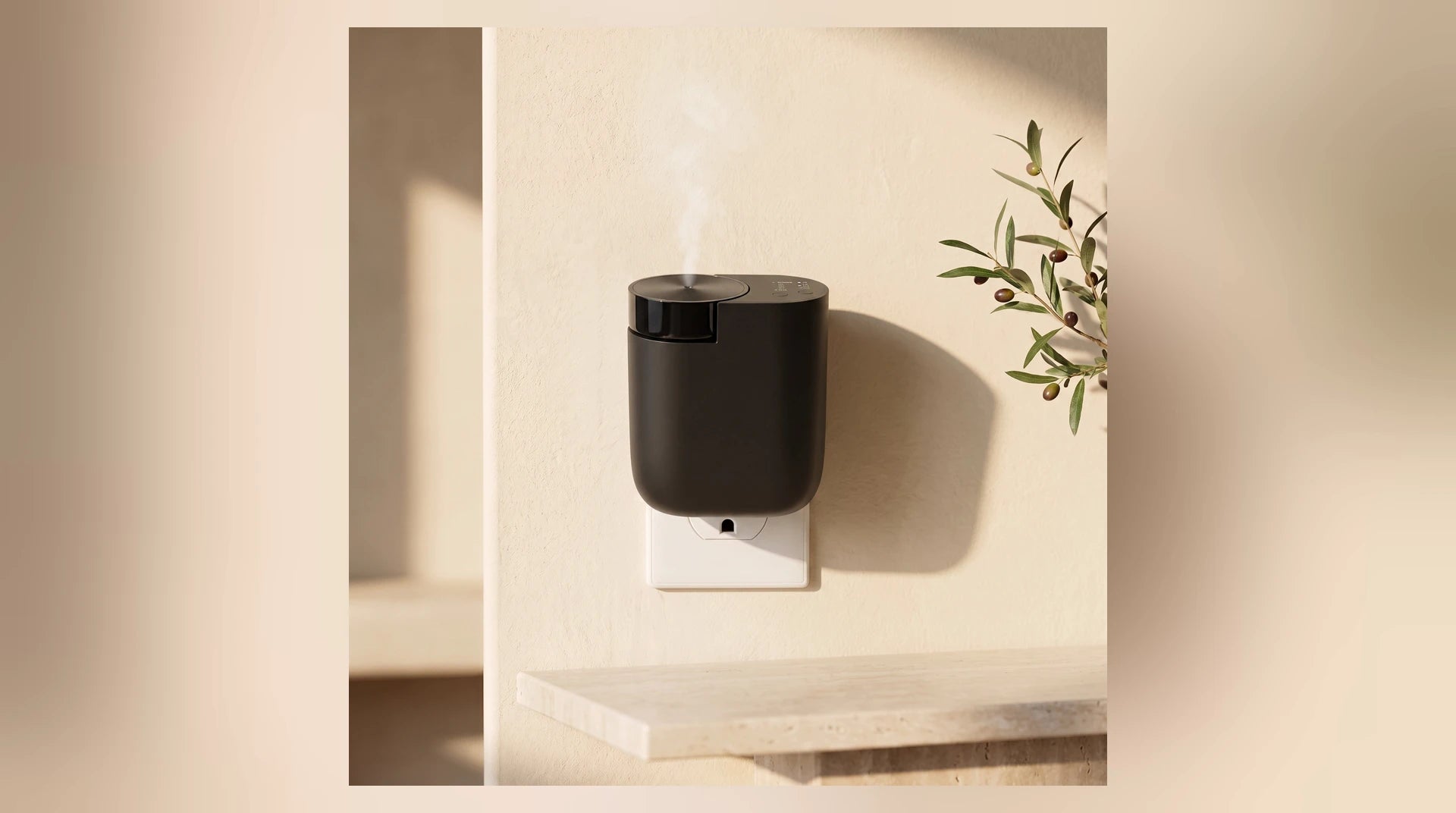
To get cooking smells out of the house, use the range hood while cooking, contain food waste, wipe greasy surfaces and ventilate connected rooms. Once smoke and residue are gone, a scheduled diffuser can restore a consistent home scent without competing with the meal.
Before, during and after
Stop cooking odor from becoming a whole-house event.
Capture the plume early, then clean the surfaces and fabrics that keep releasing it.
Prepare the airflow
Turn on a vented range hood before strong heat or frying. Close bedroom doors when the layout allows and clear the sink and bin.
Contain the source
Use lids when appropriate, move waste out and wipe splatter before it bakes onto surfaces. Do not run heavy fragrance against active cooking.
Clean, air, then scent
Continue ventilation, wash cookware and textiles, wipe grease and wait until the food plume clears before resuming the home scent schedule.
Find what is lingering
Different cooking odors remain for different reasons.
Use the odor pattern to choose the next action rather than adding another fragrance layer.
| What lingers | Likely reservoir | Next action |
|---|---|---|
| Fried-food odor | Grease film, hood filter and nearby fabric | Degrease safely and launder washable textiles |
| Fish or spice odor | Cookware, bin, sink and food residue | Clean the source and remove waste |
| Burnt-food smoke | Air plus deposited particles | Stop cooking, ventilate and clean; do not mask smoke |
| Odor the next morning | Open-plan fabrics and missed surfaces | Recheck upholstery, curtains, floors and filter care |
Current post-cooking options
Restore the home scent after the source clears.
Choose by the connected room zone and the control pattern you need. Compare exact scheduling, placement, bottle and intended-room facts on each product page.

Waterless cold-air diffuser
Contour Smart Plug-In
A compact direct-to-wall diffuser with a 60 ml oil reservoir, three intensity levels, repeating 3- or 6-hour routines and Bluetooth scheduling.
- App scheduling
- Three intensity levels
- 60 ml oil reservoir

Rechargeable waterless cold-air diffuser
Tower Ultra
An app-enabled rechargeable tower with cordless placement, IR remote, on-device control, six diffusion levels and a 120 ml oil reservoir.
- Cordless after charging
- Six diffusion levels
- App, remote or one-touch

Waterless cold-air diffuser
Arc Touch Plug-In
A compact no-app diffuser with four output levels, four timer presets and a rotating plug for upright wall-outlet placement.
- Four output levels
- No app required
- 30 ml internal bottle
Swipe to explore 3 products
Open-plan homes
Protect the living zone without overpowering it.
A kitchen and living room may share air, but they do not need fragrance during every stage of cooking.
Map the connected rooms
Open kitchens, halls and living areas often behave as one air zone. A closed bedroom or separate floor is a different control problem.
Let food be the scent
Pause or lower the diffuser before strong cooking. Competing profiles can make both the meal and the home fragrance feel heavier.
Return to the baseline
After cleanup and ventilation, resume the familiar low setting. Do not compensate for temporary food odor with maximum output.
Safety boundaryA persistent gas, electrical, smoke or burning odor is not a fragrance problem. Stop, leave the area when appropriate and follow emergency or qualified-service guidance.
Cooking-pattern playbook
Frying, spices and long meals need different resets.
The strongest remaining odor often identifies the surface, fabric or airflow step that was missed.
Manage airborne grease
Start the vented hood before the pan is hot and keep splatter contained where the recipe allows. Afterward, clean the cooktop, backsplash and nearby cabinet fronts, then check the hood filter. Wash exposed tea towels and aprons. Resume fragrance only after the greasy film and plume are gone.
Remove the small sources
Seal or remove packaging and scraps, wash the pan and utensils, clean the sink and wipe the dining surface. These odors often persist because one small source remains in the bin or drain area. Air exchange plus direct cleanup works better than introducing a competing citrus or floral fragrance immediately.
Plan for hours, not minutes
Use the hood and lids throughout the cooking window, rotate waste out and close bedroom doors before the house fills with steam and food aroma. When the meal is over, clean in stages and ventilate. Return the diffuser to its ordinary baseline later instead of using maximum output for a fast reset.
Frequently asked
Cooking-odor questions.
What removes cooking smells from a house fastest?
Capture the odor with a vented range hood, remove food waste, wash cookware, wipe grease and ventilate connected rooms. Fragrance can finish the room only after the active source and smoke are gone.
How do I get fried-food smell out of an open-plan home?
Run the hood early, clean the cooktop and backsplash, service the filter as directed and wash nearby odor-holding fabrics. Keep bedroom doors closed during cooking when practical.
Should I run a diffuser while cooking?
Usually lower or pause it during strong cooking so the fragrance does not compete with food or hide smoke. Resume a normal low setting after cleanup and ventilation.
Can fragrance cover a gas or burning smell?
No. Do not use fragrance to cover gas, electrical, smoke or unexplained burning odors. Stop and follow emergency or qualified-service guidance appropriate to the situation.
Method and sources
Ventilation and cleanup before fragrance.
The guide treats cooking odor as a source-capture and residue problem first, then applies controllable home fragrance after the kitchen is clear.
- U.S. EPA: Improving Indoor Air Quality — source control and ventilation.
- U.S. EPA: Indoor air quality in homes — household pollutant and ventilation context.
- Aroma Paradise: Room-by-room scent plan — connected-zone planning after the odor source clears.
“Capture cooking odor first; restore the house scent later.”
Source control is the durable answer. A controllable diffuser makes the finishing layer repeatable.